Celebrating Member Achievements
Advancing Oncology Pharmacy Practice in Southwestern Algeria: Establishment of the Centralized Chemotherapy Reconstitution Unit (URCC) at the CLCC (Centre de Lute Contre le Cancer) of Bechar, Algeria.
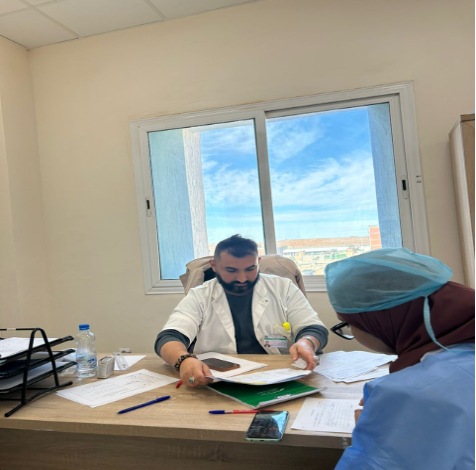
By Dr. Ali BELHACHEM, Head of URCC Department, CLCC Bechar
 |  |
The establishment of the Centralized Chemotherapy Reconstitution Unit (URCC) at the Cancer Control Center (CLCC) of Béchar marks a significant advancement in oncology pharmacy practice in southwestern Algeria. This project was developed with the objective of improving the quality, safety, traceability, and pharmaceutical management of anticancer drug preparation for patients living in remote southern regions, where access to specialized oncology pharmaceutical services remains limited.
The CLCC of Béchar serves a large geographical area in the southwest of Algeria and provides care for patients requiring complex oncology treatments. Prior to the implementation of the URCC, the need for a centralized and standardized chemotherapy compounding structure represented a major institutional and public health challenge. The realization of this department reflects a growing commitment to strengthening safe handling practices for hazardous drugs and improving oncology pharmaceutical care within the national healthcare system.
Notably, this project became the first department in Algeria to receive official authorization for realization, together with dedicated financial support from the Ministry of Health, specifically for the development of a centralized chemotherapy compounding unit. This achievement represents an important milestone in the evolution of oncology pharmacy services in the country. The URCC was designed to support four major oncology-related activities within the institution:
- Adult medical oncology
- Pediatric oncology
- Hematology
- Radiation oncology
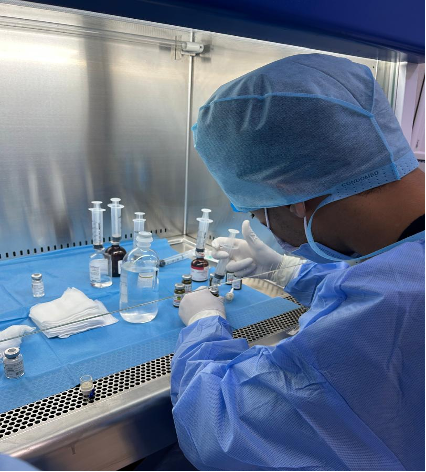
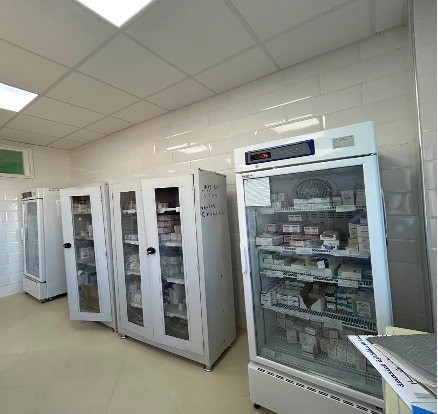
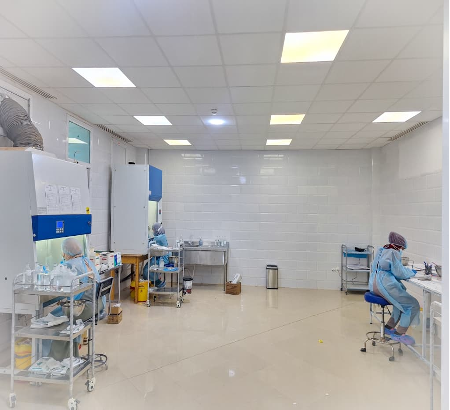
The Pharmacotechny Unit is responsible for pharmaceutical validation of chemotherapy prescriptions and centralized preparation of anticancer therapies and other high-risk injectable medications. The unit supervises the management of isolators and laminar airflow systems, secures the reconstitution process, ensures traceability of preparations, and oversees the management of specialized consumables and medical devices. In addition, the unit contributes to the optimization of residual volumes and rationalization of healthcare expenditures through improved management of chemotherapy leftovers and consumables.
The Oncovigilance and Therapeutic Drug Monitoring Unit plays a central role in monitoring the safety and tolerability of anticancer treatments. Its activities include surveillance and analysis of adverse drug reactions, participation in institutional pharmacovigilance and oncovigilance programs, and monitoring of hematological, renal, hepatic, and neurological toxicities associated with chemotherapy. The unit also contributes to individualized therapeutic management through pharmacological monitoring of selected anticancer agents and assessment of treatment adherence and tolerance.
The Clinical Pharmacy Unit promotes pharmaceutical care in oncology through comprehensive pharmaceutical analysis of chemotherapy protocols and individualized therapeutic optimization according to clinical and biological patient characteristics. The unit participates in multidisciplinary discussions, medication reconciliation processes, prevention of drug interactions and incompatibilities, and therapeutic patient education. These activities reinforce the integration of clinical pharmacy into oncology care pathways and strengthen the pharmacist’s role within the multidisciplinary oncology team.
The Quality Control and Quality Assurance Unit is dedicated to implementing and maintaining quality management systems within the compounding area. Its responsibilities include the drafting and validation of standard operating procedures (SOPs), environmental monitoring of preparation areas, and qualification of equipment through installation qualification (IQ), operational qualification (OQ), and performance qualification (PQ) procedures. These measures aim to ensure compliance with international standards for sterile hazardous drug preparation and continuous improvement of compounding quality and safety.
One of the major strengths of the department is its multidisciplinary organization. The URCC relies on a medical and paramedical team specialized in oncology pharmaceutical care and hazardous drug management. Pharmaceutical supervision is ensured by pharmacists from several complementary disciplines, including inorganic pharmaceutical chemistry, clinical pharmacy, analytical chemistry, pharmacology and galenic pharmacy. This multidisciplinary collaboration contributes to both the scientific rigor and operational quality of the department. Beyond its institutional mission, the URCC represents a major healthcare advancement for populations living in southwestern Algeria. The geographical distance between southern regions and specialized healthcare infrastructures often represents a challenge for oncology patients requiring continuous and complex therapeutic management. By centralizing chemotherapy preparation under controlled conditions, the department contributes to improving access to safe oncology treatments while enhancing traceability, quality assurance, and occupational safety for healthcare professionals handling hazardous drugs.
The creation of the URCC at the CLCC of Béchar illustrates the progressive development of oncology pharmacy practice in Algeria and highlights the essential contribution of pharmacists in ensuring the safe management of anticancer therapies. This initiative also opens new perspectives for the development of clinical oncology pharmacy, pharmacovigilance, quality assurance systems, and specialized pharmaceutical training in the region. As oncology pharmacy practice continues to evolve internationally, projects such as the URCC demonstrate the importance of multidisciplinary collaboration, institutional support, and pharmaceutical leadership in improving the quality and safety of cancer care, particularly in geographically underserved regions.
 |  |